
Body composition explained
InBody Scan vs. Scale: What Each Number Can—and Cannot—Tell You
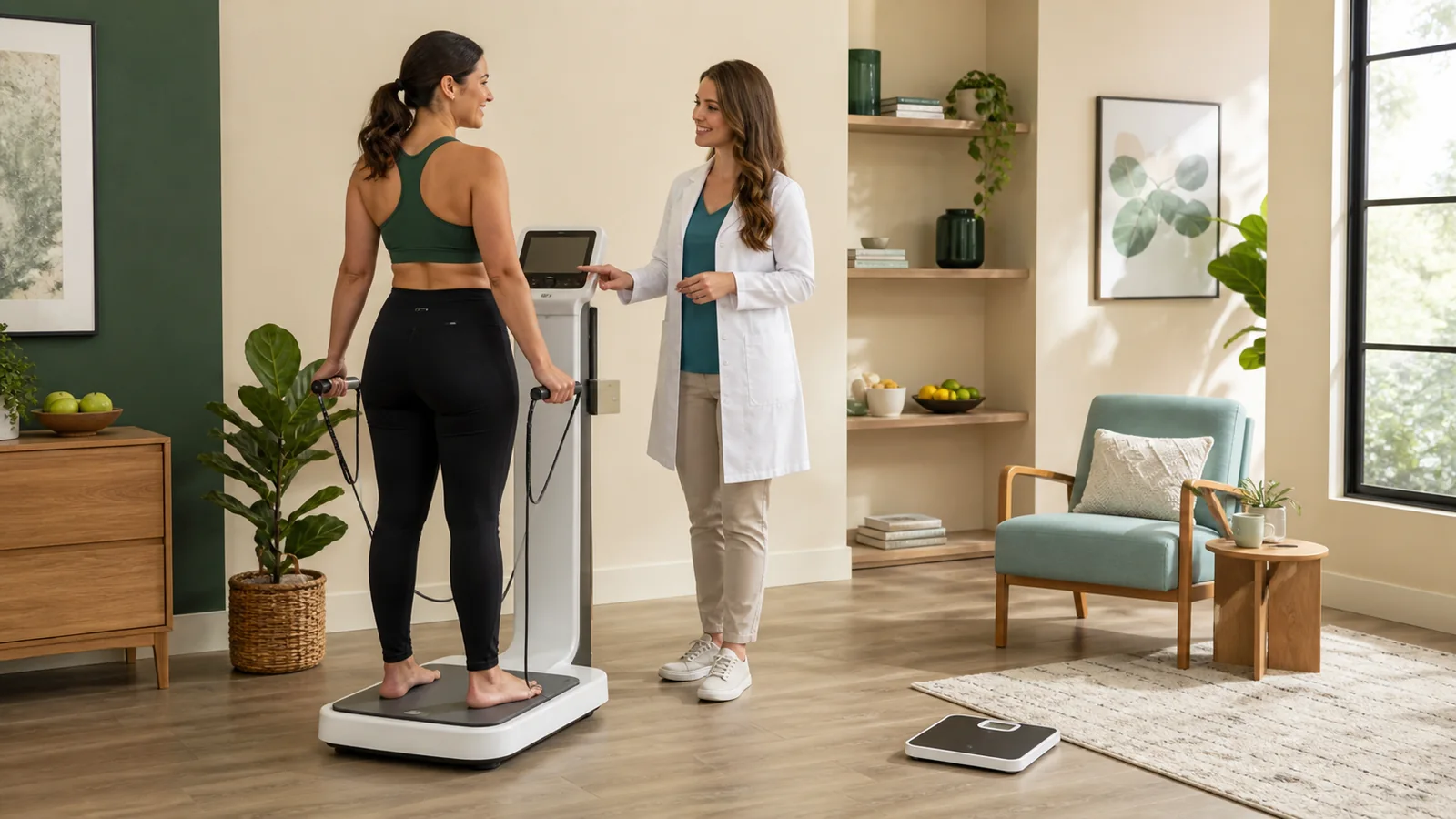
A scale measures total weight, while InBody estimates body composition. The useful question is not which number is “better,” but which information helps answer your goal—and how it should be interpreted.
Quick read
The useful idea
- A scale measures total weight; it cannot show whether a change came from fat, muscle, food, or fluid.
- InBody uses bioelectrical impedance to estimate body composition, but the report is not a diagnosis or exact measurement.
- A registered dietitian can interpret trends with strength, symptoms, medical history, labs, and nutrition instead of reacting to one number.
General education only
Use this article as a starting point—not a personal nutrition plan.
Nutrition needs can change with your diagnosis, laboratory results, medications, symptoms, culture, schedule, and goals. For guidance that fits your health and everyday life, meet with a registered dietitian before making significant dietary changes.
Want more information for your situation? Schedule a visit with a dietitian
Different tools answer different questions
Choose the measurement that fits the decision
A home scale is useful for a simple weight trend. An InBody test adds estimates of muscle, body fat, and body water. Neither tool can independently tell you what to eat, diagnose a condition, or define your health.
The most useful measurement is the one connected to a clear question. If the goal is to understand a weight trend during nutrition care, body composition may add context. If the result will not change care or support a meaningful goal, more data may not be better.
Ask what the result will help you and your care team decide before focusing on a single reading.
Use trends carefully
When the two tools may tell different stories
Stable weight
Weight may stay similar while estimated fat, muscle, or fluid changes
Quick change
A sudden shift may reflect hydration, food, or fluid rather than tissue
GLP-1 follow-up
Composition trends may add context when reviewed with strength, intake, and symptoms
These examples do not prove what happened in an individual. Bioelectrical impedance is affected by testing conditions, and small differences may reflect normal variation.
Interpret the whole picture
Why one scan should not change your plan by itself
Hydration, a recent meal, exercise, illness, menstrual-cycle-related fluid changes, edema, and the device’s equations can influence results. A registered dietitian can look for a meaningful trend and compare it with strength, waist measurements, symptoms, food intake, labs, and medical history.
The dietitian can also decide whether tracking weight or body composition is helpful at all. For some people, frequent measurements increase distress without improving care, and a different progress measure may be more appropriate.
The goal is to understand whether the pattern is consistent and useful enough to guide a conversation—not to treat every small change as a result.
Test with a clear plan
Review the result with a trained professional
Follow the clinic’s preparation and safety instructions so repeat measurements are as consistent as possible. Bring relevant medical information and explain what you hope to learn from the test.
Clear answers
Frequently asked questions
Is InBody more accurate than a bathroom scale?
It answers a different question. A scale measures total weight; InBody estimates how that weight is distributed. The estimate adds context but is influenced by testing conditions.
How often should I repeat an InBody scan?
There is no universally useful schedule. A dietitian can recommend whether and when a repeat test would add meaningful information for your goal.
Can an InBody scan diagnose a health condition?
No. The report may contribute information, but diagnosis requires the appropriate clinical criteria and professional evaluation.
Keep exploring
Services and related guidance
Choose the next page that best matches your question, or meet with a dietitian for guidance based on your health and routine.
Body composition with context
Review your InBody results with a registered dietitian
Book an assessment to understand what the estimate can show, what it cannot show, and whether any nutrition follow-up is appropriate for your goals.