
Culturally responsive diabetes nutrition
Middle Eastern Foods and Diabetes: How to Balance Rice, Bread, Dates, and Hummus
Rice, pita, lentils, hummus, dates, and family meals do not need to disappear. Learn one flexible way to look at the whole plate, then ask a registered dietitian to adapt it to your glucose pattern, medications, culture, and routine.
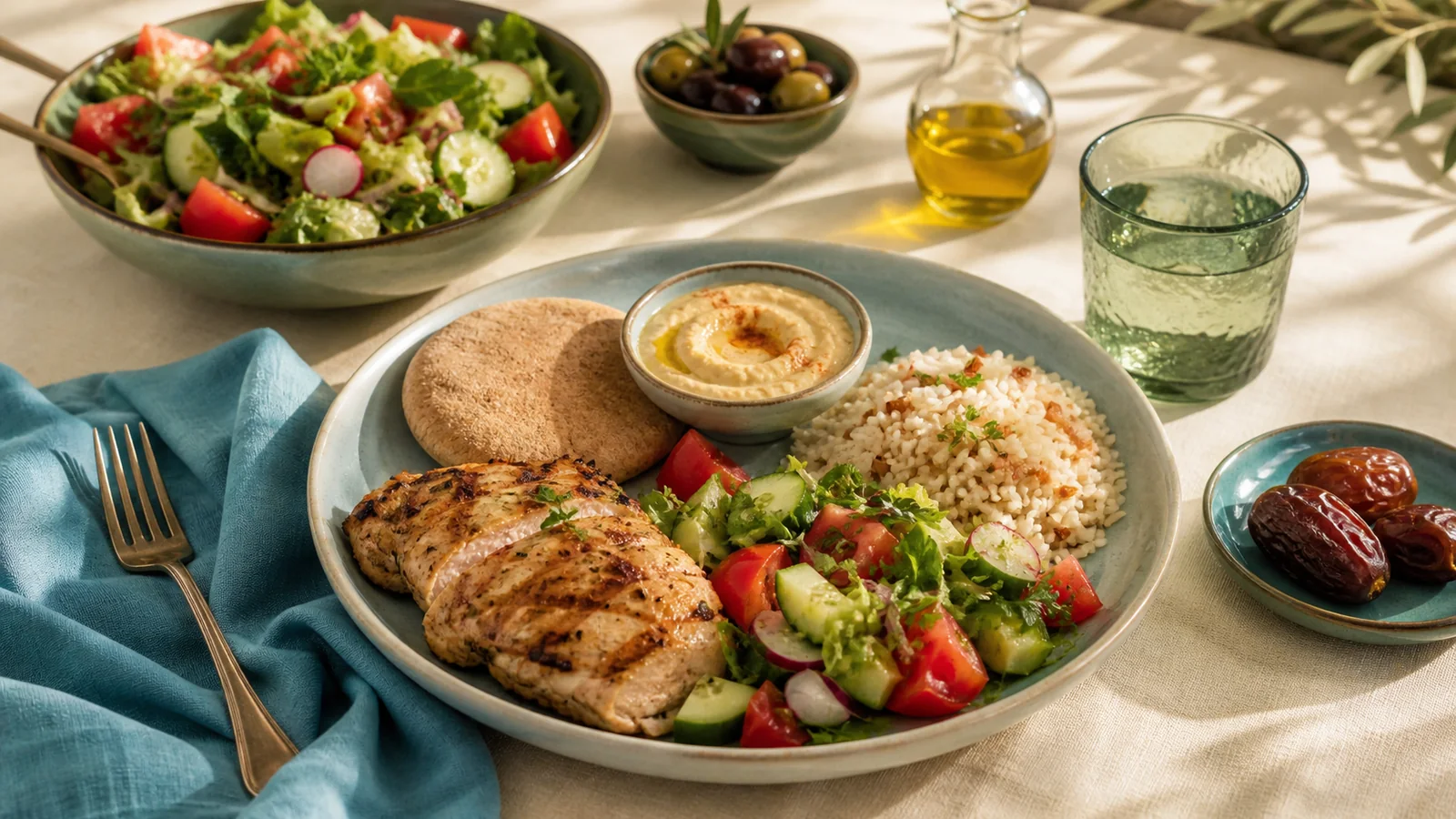
Quick read
The main idea in one minute
- Focus on the whole meal instead of labeling one traditional food as good or bad.
- Rice, pita, lentils, hummus, dates, and sweets can play different roles depending on portion, pairing, timing, and treatment.
- A registered dietitian can turn this general idea into portions and meal timing that fit your medical care and everyday life.
General education only
Use this article as a starting point—not a personal nutrition plan.
Nutrition needs can change with your diagnosis, laboratory results, medications, symptoms, culture, schedule, and goals. For guidance that fits your health and everyday life, meet with a registered dietitian before making significant dietary changes.
Want more information for your situation? Schedule a visit with a dietitian
One flexible idea
Balance the whole meal—not just one carbohydrate
Middle Eastern food is not one single cuisine, and diabetes care is not one single diet. A practical starting point is to look at the entire meal: the carbohydrate food, protein, vegetables, fats, beverages, portion, and timing all work together.
For example, rice or pita affects the meal differently when it is eaten with vegetables and a protein food than when the meal is mostly carbohydrate. That does not make one version universally “right.” It simply gives a registered dietitian a useful pattern to review with you.
A helpful nutrition plan should respect the foods you recognize, the way your family eats, your budget, and your schedule. The goal is to adjust the meal where needed—not replace it with unfamiliar “diet food.”
Examples, not prescriptions
How a dietitian may look at three familiar foods
Rice or pita
A dietitian may review the usual amount, what else is on the plate, meal timing, and your glucose pattern rather than removing the food automatically.
Lentils or hummus
These foods provide carbohydrate as well as fiber and plant protein. Their role depends on the recipe, serving, and the rest of the meal.
Dates or sweets
Frequency, amount, medication, and whether they are eaten alone or with a meal can matter. There is no universal online limit for everyone.
These examples are meant to show how context changes a nutrition decision. They are not serving instructions, carbohydrate targets, or a personal meal plan.
Your treatment changes the answer
Why the same meal may need a different plan for you
Diabetes type, insulin or other medicines, glucose trends, kidney and heart health, appetite, activity, pregnancy, and fasting practices can all change what is appropriate. A registered dietitian can review these details and coordinate nutrition with the treatment set by your medical team.
If you are considering Ramadan fasting and use insulin or medicine that can cause low blood glucose, speak with your prescribing clinician before changing meal or medication timing.
Learn more about personalized diabetes nutrition counseling, meet our registered dietitians, or verify your nutrition benefits. Related reading: how nutrition fits into diabetes care and what makes a balanced diabetes breakfast.
Clear answers
Frequently asked questions
Do I have to stop eating rice or pita?
Not necessarily. The useful amount and timing depend on the complete meal, your glucose pattern, medications, and goals. A registered dietitian can help you make that decision without removing familiar foods automatically.
Are lentils and hummus carbohydrate foods?
They provide carbohydrate along with fiber and plant protein. A dietitian can help you understand how the recipe and usual serving fit the rest of your meal.
Can I fast for Ramadan if I have diabetes?
The answer depends on diabetes type, medications, glucose history, pregnancy, kidney health, and other factors. Plan with your prescribing clinician and dietitian before fasting or changing medication timing.
Keep exploring
Services and related guidance
Choose the next page that best matches your question, or meet with a dietitian for guidance based on your health and routine.
Culturally responsive diabetes care
Build a diabetes plan around the foods you actually eat
Meet with a Healthy All Time registered dietitian for guidance that reflects your traditional foods, medications, glucose patterns, health needs, and daily routine.