
Body composition testing
How to Prepare for an InBody Scan
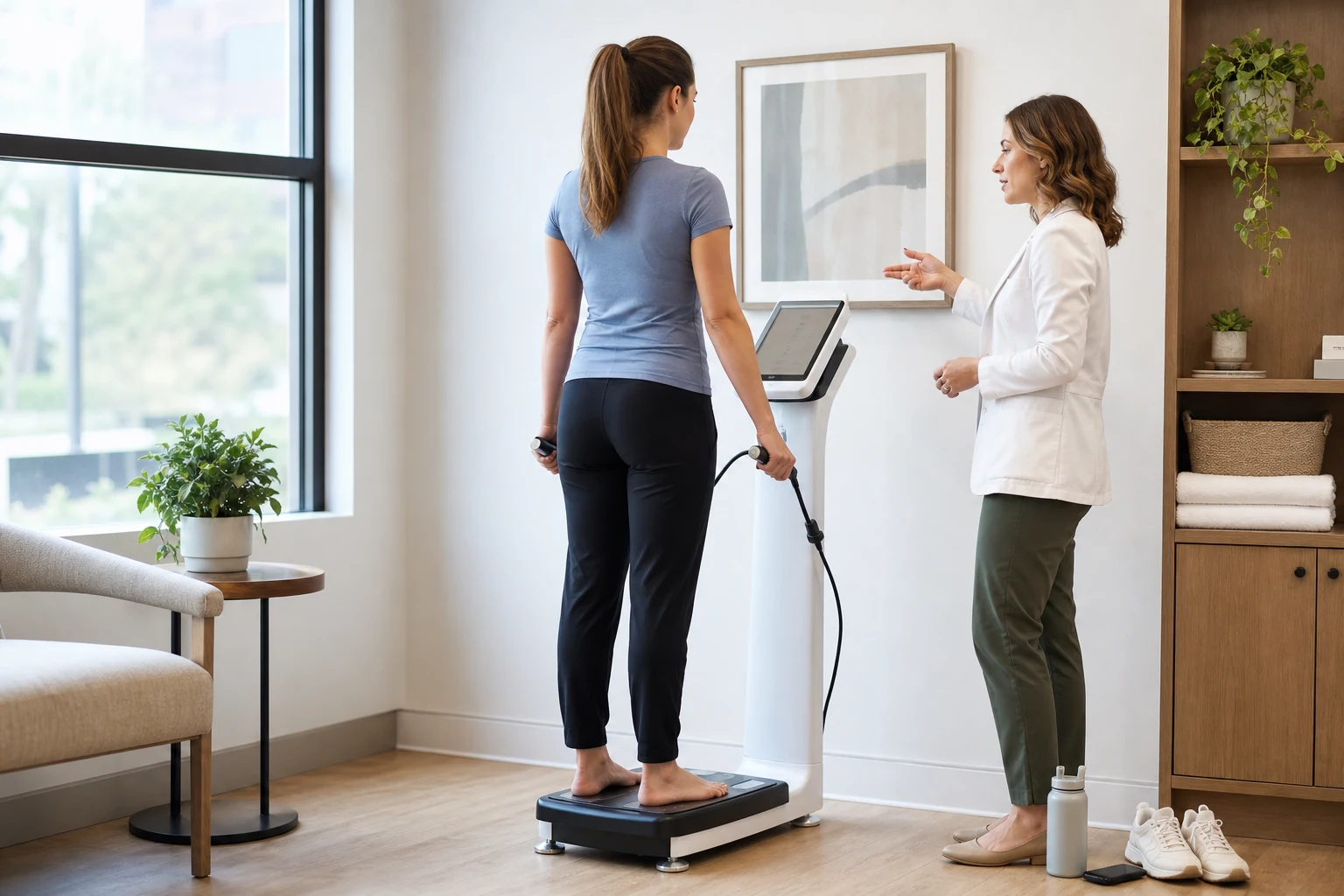
Meals, exercise, hydration, clothing, and time of day can shift a bioelectrical-impedance result. Consistent preparation makes a scan easier to compare with your own future results.
Quick read
The useful idea
- Follow the clinic’s instructions and try to repeat the same conditions each time you complete an InBody scan.
- Normal hydration, meal and exercise timing, the restroom, and bare feet all affect how useful the comparison may be.
- Tell the clinic before testing if you are pregnant or have an implanted cardiac or other electronic medical device.
General education only
Use this article as a starting point—not a personal nutrition plan.
Nutrition needs can change with your diagnosis, laboratory results, medications, symptoms, culture, schedule, and goals. For guidance that fits your health and everyday life, meet with a registered dietitian before making significant dietary changes.
Want more information for your situation? Schedule a visit with a dietitian
Prepare for comparison
Consistency matters because body water can change the reading
An InBody device uses bioelectrical impedance to estimate body composition, including muscle, fat, and body water. Hydration, a recent meal, exercise, temperature, and other conditions can influence the estimate even when body tissue has not meaningfully changed.
The goal of preparation is not to produce the “best” result. It is to create a more consistent baseline that can be compared with a future scan completed under similar conditions.
Maintain your normal fluid intake and follow the specific instructions from the clinic performing your scan.
Keep the checklist short
Four details to confirm before your appointment
Meals and fluids
Maintain normal fluid intake the day before, hydrate about one hour before, and wait at least three hours after eating unless the clinic instructs you differently.
Exercise and recovery
Avoid testing until you are fully recovered from exercise, because activity can shift muscle, fat, and body-water estimates.
Right before the scan
Use the restroom, stand upright briefly, and allow your body temperature to settle after very hot or cold conditions.
Clothing and contact
Wear light clothing and remove socks, pantyhose, heavy jewelry, watches, and lotion from the hands or feet.
If your clinic sends different instructions for its specific device or your medical needs, follow those instructions and call with questions before the appointment.
Not everyone should use the same checklist
Health and treatment can change how the scan is planned
Tell the clinic before testing if you are pregnant, have a pacemaker or another implanted electronic medical device, have significant fluid retention, use dialysis, or have difficulty standing safely. The clinic may advise against testing, request medical clearance, or explain limitations in interpretation.
Your dietitian should also know about recent illness, large changes in hydration, medication changes, or a major shift in carbohydrate intake. Those factors can change body water and make a comparison harder to interpret.
One result should not trigger a restrictive diet or define progress. Review the pattern with strength, symptoms, food intake, medical history, and goals.
Arrive ready to ask what the data means
Plan to review the result, not just collect it
At the appointment, confirm how future scans should be timed and which measurements are relevant to your goal. A dietitian can explain normal variation, decide whether a repeat scan would be useful, and connect the report with a broader nutrition assessment.
Clear answers
Frequently asked questions
Can I drink water before an InBody scan?
InBody advises maintaining normal fluid intake and hydrating about one hour before testing. Do not intentionally dehydrate or drink an unusual amount; follow the clinic’s specific instructions.
How long should I wait after eating?
InBody’s current preparation guidance says to wait at least three hours after a meal. Confirm the timing with the clinic, especially if fasting affects a medical condition or medication schedule.
What should I wear for an InBody scan?
Wear light, comfortable clothing. You will need bare feet on the electrodes, so remove shoes, socks, or pantyhose, along with heavy jewelry and a watch.
Keep exploring
Services and related guidance
Choose the next page that best matches your question, or meet with a dietitian for guidance based on your health and routine.
Body composition with context
Schedule an InBody scan you can review with a dietitian
Prepare under consistent conditions, receive your body-composition report, and discuss what the estimates may—or may not—mean for your goals.