
PCOS & women’s nutrition
How a Dietitian Personalizes a PCOS Grocery List
There is no universal list of “PCOS-approved” foods. A useful grocery plan makes balanced meals easier while leaving room for your culture, budget, symptoms, medications, and reproductive goals.
Quick read
The useful idea
- PCOS does not require one special diet or a list of forbidden foods.
- A simple cart can include produce, a protein choice, and a fiber-containing carbohydrate—but the exact foods and amounts differ.
- A registered dietitian can connect grocery choices with symptoms, labs, medications, fertility goals, culture, and budget.
General education only
Use this article as a starting point—not a personal nutrition plan.
Nutrition needs can change with your diagnosis, laboratory results, medications, symptoms, culture, schedule, and goals. For guidance that fits your health and everyday life, meet with a registered dietitian before making significant dietary changes.
Want more information for your situation? Schedule a visit with a dietitian
Shop for meals, not labels
A grocery list should reduce decisions—not create more rules
PCOS is complex, and research does not identify one eating pattern that is best for everyone. A rigid “approved foods” list can make shopping harder without accounting for what you actually enjoy, tolerate, or can afford.
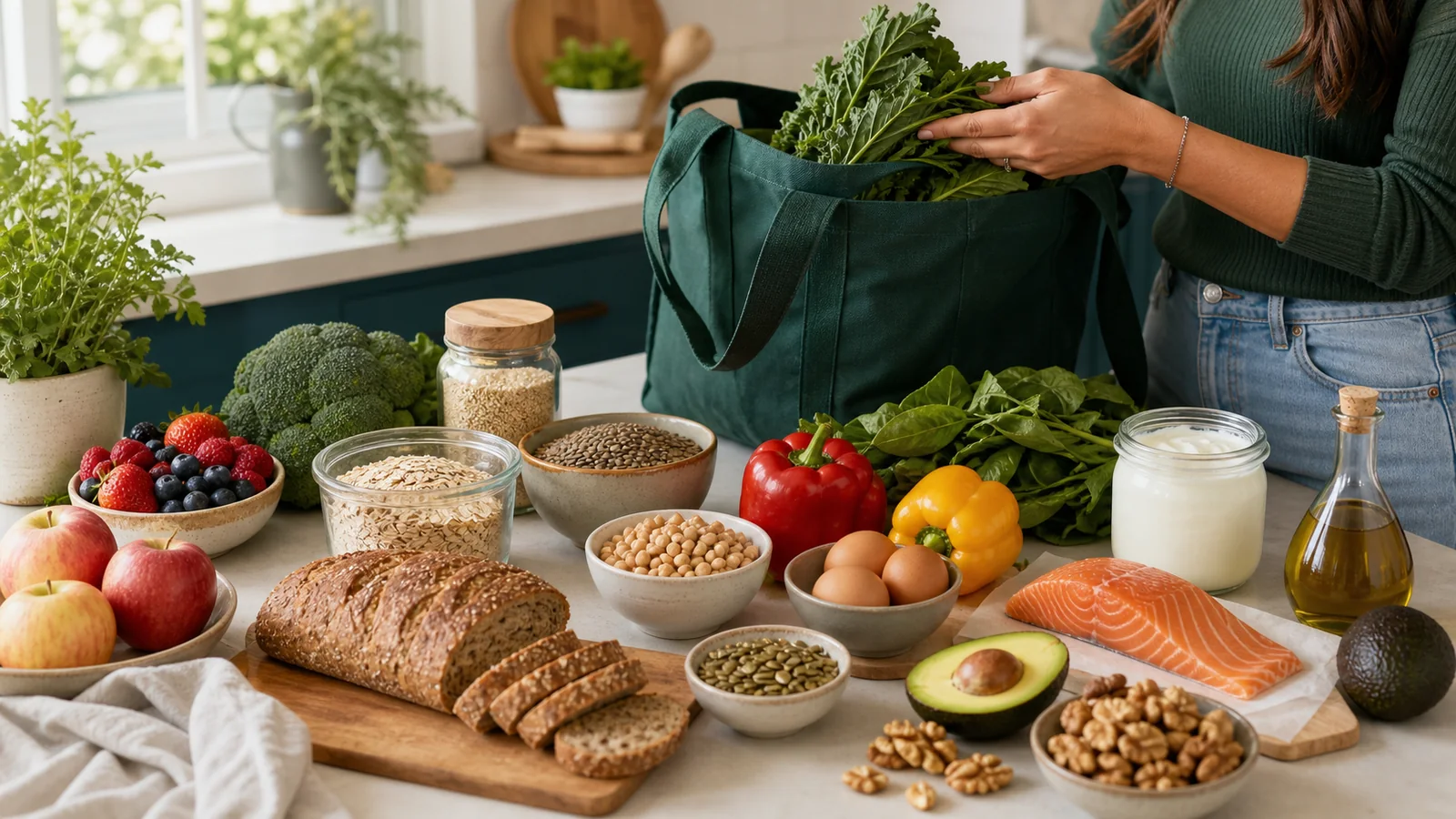
A more useful idea is to choose foods that can work together in balanced meals. That may include produce, a protein source, and a fiber-containing carbohydrate. The combination matters more than finding a perfect product.
Traditional foods, convenience foods, and favorite foods can often remain part of the plan. The role, frequency, and portion should be discussed in the context of your health.
Examples, not a prescription
Three flexible ways to build a cart
Quick breakfast
Yogurt or soy yogurt, fruit, and nuts or seeds
Easy lunch
Beans or chicken, vegetables, and bread or a grain you enjoy
Simple dinner
Fish or tofu, a familiar starch, and fresh or frozen vegetables
These combinations are only examples. Allergies, digestive symptoms, food access, medications, and nutrition needs may make different choices more appropriate.
PCOS looks different from person to person
The same grocery list may not serve the same goal
One person may want help with energy and meal consistency; another may be managing diabetes risk, digestive symptoms, fertility treatment, pregnancy, cholesterol, or a history of restrictive dieting. Those situations should not receive an identical plan.
A registered dietitian can review glucose and lipid results, medications and supplements, hunger patterns, symptoms, reproductive goals, cooking access, culture, and budget. The result should be a shorter, more useful list—not a longer list of rules.
Bring your usual grocery receipt or list to a visit. It gives the dietitian a realistic place to start.
Connect food choices with your care
Get a grocery plan designed around you
Nutrition counseling can help you decide which two or three changes are most relevant now and how to monitor whether they help. It should also coordinate with the clinician managing PCOS, medications, or fertility care.
Clear answers
Frequently asked questions
Do I need to avoid carbohydrates with PCOS?
No general article can determine your personal carbohydrate needs. A dietitian can help choose types, portions, and meal combinations that fit your labs, medications, symptoms, and preferences.
Do I have to avoid dairy or gluten?
Not simply because you have PCOS. Avoidance may be appropriate for an allergy, intolerance, celiac disease, or another individual reason, but unnecessary restriction can make eating harder.
What should I bring to a PCOS nutrition visit?
Bring a medication and supplement list, recent labs when available, your main questions, and an honest picture of your usual shopping and eating routine.
Keep exploring
Services and related guidance
Choose the next page that best matches your question, or meet with a dietitian for guidance based on your health and routine.
Personalized PCOS nutrition
Build a grocery list that fits your health and real life
Meet with a registered dietitian to turn broad nutrition guidance into practical choices for your symptoms, labs, culture, budget, and goals.